Sunday, May 15, 2016

Nathaniel Turner & Other Monsters


Frankenstein by Mary Shelley

http://www.amazon.com/Frankenstein-Penguin-Classics-Mary-Shelley/dp/0143105035/ref=nosim/?tag=chickenajourn-20

Now a Penguin Classics Deluxe Edition with an introduction by Elizabeth Kostova and cover art by Ghost World creator Daniel Clowes, Mary Shelley's timeless gothic novel presents the epic battle between man and monster at its greatest literary pitch. In trying to create life, the young student Victor Frankenstein unleashes forces beyond his control, setting into motion a long and tragic chain of events that brings Victor to the very brink of madness. How he tries to destroy his creation, as it destroys everything Victor loves, is a powerful story of love, friendship, scientific hubris, and horror.


 *   *   *   *   *


Bop: M. Shelley’s Frankenstein

They say he had a son—in the lore after his death.
But he never knew a woman, nor a wife. He was
wed to the Son most pure. His diary he drank
fully while he was a child and worshipped
 him as a man. He plowed his brother’s field til he
was 21, ran away, returned father of his brother’s son.

Ya runnin’ and ya runnin’ but ya can't run away from yourself

At his wake they said he in the open casket had no son
to cry forgiveness before his sister’s coffin, I was
there—entangled in unsettling memories. My burden
heavy as an outsider at a Baptist send away. As I
sat indulgently quiet, the services ran on and on.
My residence in a more ethereal world, my mother
said his elder sister forgot my birth.  Aunt baldheads
plow with no handles, forget teary mementors.
My story of strife is well known. I was sixteen.

Ya runnin’ and ya runnin’ but ya can't run away from yourself

They did not know he had a son of his own creation. For
he had no wife that he consummated. He gave his son no
name, no identity that the son could claim, but ugliness.
He asked his father to give him beauty, for he had so much love
and no one on which to satisfy his desire. He knew only rage.
The father refused his love. Cold they left the world in flames.

Ya runnin’ and ya runnin’ but ya can't run away from yourself

Rudolph Lewis        24 June 2010  


 *   *   *   *   *

An Overview


In the last stanza I point to a particular film version (1994), in which Frankenstein's son is played by Robert DeNiro.

This Frankenstein film was in color and ends in the arctic.  It was difficult to discern who was the real rationalist, the real human, the real monster. This monster notion is questioned throughout the film. It is a deceptive classification: Is it man or man's creation that is monstrous?

It was shown how Frankenstein's son could be gentle, caring, and thoughtful (he was a reader, a reader of his father's journal). Frankenstein Junior is profoundly hurt, abandoned, injured. But he can kill also without feeling.

Turner of Southampton was also called "monster": his killing or ordering the killing of man, woman, and child is disturbing. Whites today in the environs of Southampton still view him through these lens. One can at one’s peril ignore this warning. The notion that slavery and all of its consequences is not felt or grasped then or now. http://www.nathanielturner.com/nathanielturner2.htm
 
There too is this notion of "madness" that is explored in the film. There's the emphasis as well on beauty and ugliness and its recognition in terms of possessing a "soul." So there is a lot going on in the film and in the story of Turner. I have placed my own biography in the midst of all of that in the middle stanza, as a means of exploring family relationships.

Whether the poem encapsulates all of this is still up for question. The poem may still need work, some additions (deletions). I have the time and energy and interest to see the poem through this vision of the poem and Turner.

Loving you madly, Rudy


 *   *   *   *   *

Okay, Rudy, 

Your tying the Frankenstein story to Nat Turner is a stroke of genius   Anyone who cannot see the connection is being deliberately blind.  I had a sense that there might be a family history connection; this clears up some things.--Wilson


  *   *   *   *   *

Poetic Form: The Bop 

 A recent invention, the Bop was created by Afaa Michael Weaver during a summer retreat of the African American poetry organization, Cave Canem. Not unlike the Shakespearean sonnet in trajectory, the Bop is a form of poetic argument consisting of three stanzas, each stanza followed by a repeated line, or refrain, and each undertaking a different purpose in the overall argument of the poem.

The first stanza (six lines long) states the problem, and the second stanza (eight lines long) explores or expands upon the problem. If there is a resolution to the problem, the third stanza (six lines long) finds it. If a substantive resolution cannot be made, then this final stanza documents the attempt and failure to succeed.

Although it is a young form, the Bop already exists in variations. In addition to the three-stanza Bop, some have added a six-line fourth stanza, still ending on the refrain. A good example of how a Bop introduces the crisis at hand, is a poem by Lyrae Van Clief-Stefanon, whose first book, Black Swan, features three Bop poems. One of them, called “Bop: Haunting," begins:

“In the evening she comes, her same unsatisfied self,
with the hard, smug look of salvation. Mama,
stop bothering me. When we argue, she says
what you’re saying is not scriptural.
You need to get back in your Bible.

In one dream, I slap her. I’m tired of her mouth.
I hate to see the evening
Sun go down”

In this case, the refrain “I hate to see the evening / Sun go down” appears at the end of the subsequent two stanzas, suggesting the mournful, blue tone of the speaker who, at the end, seems not to have found the solution to her “conjuring” woes. https://www.poets.org/poetsorg/text/poetic-form-bop  


                                                                             *   *   *   *   *
Mass Lynching 1919


237 Forgotten in Arkansas

In 1919, after the end of World War I, Black sharecroppers in Arkansas began to unionize. This attempt to form unions, triggered white vigilantism and mass killings, that left 237 Blacks dead.

Towards the end of 1918, attorney Ulysses S. Bratton of Little Rock, Arkansas listened to Black sharecroppers tell stories of theft, exploitation, and never ending debt. One man by the name of Carter, explained how he cultivated 90 acres of cotton and then had his landlord confiscate the crop and all of his possessions. Another Black farmer, from Ratio, Arkansas said a plantation manager would not give sharecroppers an itemized record of their crop. No one realized that within a year of meeting with Mr. Bratton, one of the worst incidents of racial violence in U.S. would take place. In a report released by the Equal Justice Initiative, white people in the Delta region of the South, started a massacre that left 237 Black people dead. Even though the one-time death toll was unusually high, it was not uncommon for whites to use racial violence to intimidate Blacks.

 http://blackmainstreet.net/never-forget-americas-forgotten-mass-lynching-237-black-sharecroppers-murdered-arkansas/
                                                        
                                                  *   *   *   *   *
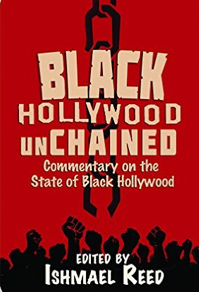


Black Hollywood Unchained  
Edited by Ishmael Reed

http://www.amazon.com/Black-Hollywood-Unchained-Ishmael-Reed/dp/0883783533/ref=nosim/?tag=chickenajourn-20 


In Black Hollywood Unchained, Ishmael Reed gathers an impressive group of scholars, critics, intellectuals, and artist to examine and respond to the contemporary portrayals of Blacks in films.  Using the 2012 release of the film Django Unchained as the focal point of much of the discussion, these essays and reviews provide a critical perspective on the challenges facing filmmakers and actors when confronted with issues on race and the historical portrayal of African American characters. Reed also addresses the black community’s perceptiveness as discerning and responsible consumers of film, theatre, art, and music. Contributors to this collection are: Jill Nelson, Amiri Baraka, Cecil Brown, Halifu Osumare, Houston A. Baker, Tony Medina, Herb Boyd, Jerry Ward, Ruth Elizabeth Burks, Art Burton, Justin Desmangles, Jesse Douglass, Jack Foley, Joyce A. Joyce, C. Leigh McInnis, Heather Russell, Harriette Surovell, Kathryn Takara, and Al Young.

Black Hollywood Unchained—Once again Ishmael Reed demonstrates prescience in creating a forum for discussion of the American mindscape and some of the pathological critters that range so freely in it. Readers who wish to engage in critical thinking about aesthetics and cognitive manipulations, about sinister and thoroughly racialized discourses in our nation, can profit greatly from reading BLACK HOLLYWOOD UNCHAINED.—Jerry W. Ward Jr.


*   *   *   *   *


The Border That We Keep


Lynchings--A century ago, in 1916, a Wisconsin newspaper remarked: “That there are still lynchings in the far west, especially along the Mexican border, would hardly seem to be open to question, although they escape the average collector of statistics. The subject is one that invites searching inquiry.” For more than 80 years, from 1848 to 1928, systemic analysis failed to assess the lynching of Mexicans that took place in the United States. There was very little scholarly concern for Mexican lynchings during this time, and the resultant models that sought to explain the mob violence that Mexicans suffered did not really exceed the narrower, racial focus on blacks in the South. 

A conservative estimate finds that nearly 600 Mexican lynchings took place between 1848 and 1928 in the U.S. Historians put forth this number with a word of caution: the definition of lynching has changed so much over time that an accurate collection of mob violence data is practically impossible. Used here, the term “lynching” indicates an act of murder that is retributive and/or committed by a person or persons claiming to act on behalf of the interests of justice, tradition, and the community or common good. Even despite all efforts towards a working definition of lynching, a precise count of Mexican victims is generally considered impossible to render.

http://www.latinorebels.com/


*   *   *   *   *

The Niggerization of Palestine
By Jonathan Scott


The parallel between the nature of Israel’s establishment in 1948 and the Anglo-American extermination of the indigenous population, the Native Americans, during the eighteenth and nineteenth centuries is clear and many Palestinian scholars have always stressed it. In 1948 Israeli Zionists executed a genocidal war against the Palestinians, the style of which would have made Joseph Conrad nod in instant recognition. Recall his description in Heart of Darkness of the murderous British imperialism let loose in the Congo: “They were conquerors, and for that you want only brute force—nothing to boast of, when you have it, since your strength is just an accident arising from the weakness of others. They grabbed what they could get for what was to be got. It was just robbery with violence, aggravated murder on a great scale.” 

More than 800,000 Palestinians, or 80 percent of the indigenous population, were forcibly expelled from their land and the ripest parts of it, the beautiful and bustling port cities of Haifa, Jaffa, and Akka, immediately confiscated by Israeli Zionists and set aside for Jews only. Palestinians had fled in horror after having either witnessed first-hand the massacre of fellow townspeople and villagers or heard the stories of the hundreds of neighboring towns and villages razed to ground by Zionist militias, who murdered everyone refusing to abandon their homes. 

Many works of Palestinian historiography are available that document these basic facts, and there are several classic works of Israeli historiography that do the same, which came out of the 1980s period in which a great deal of declassified material was released by Israel. See in particular Rosemary Sayigh’s Palestinians: From Peasants to Revolutionaries and Nur Masalha’s Expulsion of the Palestinians; for the Israeli accounts, see Benny Morris’s The Birth of the Palestinian Refugee Problem and Simha Flapan’s The Birth of Israel. These Israeli scholars use the term “ethnic cleansing” to describe the establishment of Israel and its dispossession of the Palestinians. By the logic of the Israel Lobby, these Jewish scholars are guilty of “anti-Semitism” and worse are “self-hating Jews,” even though both scholars are actually staunch Zionists.  


Thursday, May 12, 2016

Racial Nationalism: To the Death Politics


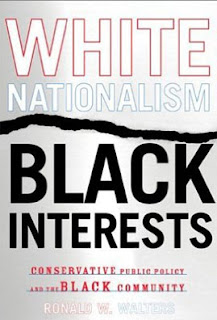
White Nationalism, Black Interests
Conservative Public Policy and the Black Community 
by Ronald W. Walters

http://www.amazon.com/dp/0814330207/ref=nosim/?tag=chickenajourn-20 


Walters traces the emergence of what he calls a new White Nationalism, showing how it fuels the Conservative movement, invades the public discourse, and generates policies that protect the interests of white voters at the expense of blacks and other nonwhites. Using historical and contemporary examples of White Nationalist policy, as well as empirical public opinion data, Walters demonstrates the degree to which this ideology exists among white voters and the negative impact of its policies on the black community. White Nationalism, Black Interests terms the current period a "second Reconstruction," comparing the racial dynamics in the post-Civil Rights era to those of the first Reconstruction following the end of the Civil War. Walters's analysis of contemporary racial politics is uniquely valuable to scholars and lay readers alike and is sure to spark further public debate.

http://www.amazon.com/dp/0814330207/ref=nosim/?tag=chickenajourn-20  http://www.amazon.com/dp/0814330207/ref=nosim/?tag=chickenajourn-20

*   *   *   *   *

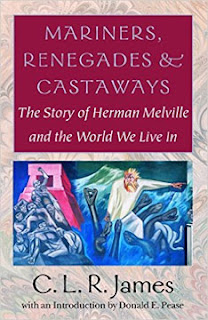
Mariners, Renegades and Castaways: The Story of Herman Melville and the World We Live In by C. L. R. James

http://www.amazon.com/Mariners-Renegades-Castaways-Reencounters-Perspectives/dp/158465094X/ref=nosim/?tag=chickenajourn-20


In his seminal work of literary and cultural criticism, Mariners, Renegades and Castaways, James anticipated many of the concerns and ideas that have shaped the contemporary fields of American and Postcolonial Studies, yet this widely influential book has been unavailable in its complete form since its original publication in 1953. A provocative study of Moby Dick in which James challenged the prevailing Americanist interpretation that opposed a "totalitarian" Ahab and a "democratic, American" Ishmael, he offered instead a vision of a factory-like Pequod whose "captain of industry" leads the "mariners, renegades and castaways" of its crew to their doom.

In addition to demonstrating how such an interpretation supported the emerging US national security state, James also related the narrative of Moby Dick, and its resonance in American literary and political culture, to his own persecuted position at the height (or the depth) of the Truman/McCarthy era. It is precisely this personal, deeply original material that was excised from the only subsequent edition. With a new introduction by Donald E. Pease that places the work in its critical and cultural context, Mariners, Renegades and Castaways is once again available in its complete form.


 *   *   *   *   *


Last Man Standing
— for Henry Nicholas

At age 71 Nick like a black pontiff sits at the head
table spreads his arms and invites us to a great feast
of salmon, fruits, & cakes. On his throne he’s king,
a magician who batons a dark music in a great hall
at Hyatt, Inner Harbor. His soldiers are armed with
union cards for dignity & integrity, a defense against
slave drivers of the poor. 15 years after the split I
edge to where he sits in blue solitude. He’s made it
big in Philly politics, this Mississippi bluesman, no
Ph.D., wielding power like she’s his bitch. He tells

me, “I should’ve killed him when I had a mind to,”
eyes burning into my brain. He’s got that Mafia NJ-
NY thing down pat, shifts the ground under my feet
where I sit. He starts up again, “I knew he was gonna
sell me out. I respected his wife, she I listened to.
But he broke the leash of what can catwalk in this town.
Power’s bloody, to the death.” I smiled uneasily. I

handed him my letter years ago when I was a 1199er,
for a moment “The real leaders were killed off or sold
out.” He sees the past as a sign. “The rest were followers.
I’m the last man standing.” Where are they? He ran them
down. “He’s dead . . . all dead. I made them. They betrayed
me. Where they now? Dead—no power. We’re still moving.”
I spoke of his nemesis. “He’s driven into a one-way alley,
and can’t turn around. These revolutionaries, they’ll say
anything. They ain’t got no vision to remake the world,
and they’re still losing workers.” . . . Feared, adored, Nick
mystifies, like a god awakened from the crypt. And
though he’s an SOB, treacherous & dangerous, I like
his bravado: he’s stayed the course. He concludes, “No
tears for me just go pass out some muthafuckin cards.”

http://www.nathanielturner.com/henrynicholasonsocialjusticeinamerica.htmhttp://www.nathanielturner.com/henrynicholasonsocialjusticeinamerica.htm   


*   *   *   *   *

Henry Nicholas on Social Justice in America 


A Black Commentator Interview

"Make sure that you're not organizing solely to collect dues," says Henry Nicholas, President of the National Union of Hospital and Health Care Employees (NUHHCE) and an International Vice President of AFSCME, the giant public employees union. Nicholas, 65, has led NUHHCE since 1981, when it was known simply as Local 1199 AFL-CIO.

1199 set a modern-day standard for militant advocacy for social justice, within and beyond the union movement. NUHHCE and AFSCME currently represent 375,000 health care employees. Nicholas works ceaselessly to gather the nation's health care workers under one, big union umbrella. He spoke to BC from his Philadelphia offices. 


 http://www.nathanielturner.com/henrynicholasonsocialjusticeinamerica.htm

 *   *   *   *   * 

C. L. R. James: A Critical Introduction by Aldon Lynn Nielsen


In C. L. R. James: A Critical Introduction a literary critic undertakes for the first time a sustained analysis of James's major published works, placing them in the context of James's less well-known writings as an activist and journalist. Nielsen, who was once a student in James's courses in American universities, offers an encompassing critique of one of the African diaspora's most significant thinkers and writers. Here the author of Black Jacobins, World Revolution, A History of Pan-African Revolt, Notes on Dialectics, Beyond a Boundary, and the lyric novel Minty Alley is seen not only as among the great political philosophers but also as the literary artist that he remained, from his first writings in Trinidad through his underground years in America, to his final essays and speeches in London. The writings of James have inspired revolutionaries on three continents, have altered the course of historiography, have shown the way toward independent black political struggles, and have established the basis for much of today's cultural studies.


*   *   *   *   *


New Orleans: Celebrating Life and Death


Second Line Home: New Orleans Poems
By Mona Lisa Saloy


http://www.amazon.com/Second-Line-Home-Orleans-Odyssey/dp/1612481000/ref=nosim/?tag=chickenajourn-20


In this celebration of life in death, Mona Lisa Saloy captures the solemn grief, ongoing struggle, and joyous processions of New Orleans after the devastation left by Hurricane Katrina. She knows the music of the neighborhood spoken and sung in affirmation of what is genuine and hopeful, as well as the despair of destruction that nature and politics heaped upon The Crescent City. Saloy's details of down-home activities and use of local expressions convey the many cultures and voices of this unique place. In this ode to New Orleans there is joy and hope, and a passionate call to join the resilient Second Line.


http://www.amazon.com/Second-Line-Home-Orleans-Odyssey/dp/1612481000/ref=nosim/?tag=chickenajourn-20  


*   *   *   *   *


Resurrecting We after the Flood

June 2005, almost a decade ago, was the time I last visited New Orleans. It was still almost the Big Easy I knew in the mid-1980s. Several months later the nation observed via television the flooding of the Crescent City—85 percent after levees collapsed. The Lower 9th Ward was devastated and much of the 7th Ward. That is, entire communities and family homes were destroyed and were never to be reoccupied. New Orleans lost 140,845 residents, most of which were black and poor. Maybe the best of New Orleans retreated to cities in Texas, and other sanctuaries east, north, and west—made refugees by government officials.

That is, the abandoned poor were not given a choice—they went where they were sent. Other cities provided these impoverished rejects opportunities New Orleans wouldn’t. Only a quarter of the city’s 4,200 public housing units demolished . . . have been rebuilt” The black population fell from 67.3 percent to 60.2 percent.  Over a 1,000 were killed by the flooding (David Mildenberg, “Census Finds Hurricane Katrina Left New Orleans Richer, Whiter, Emptier”). “City blocks . . . smile / Toothless, missing homes now demolished, / Families lost to Gonzales, Vacherie, Houston / Black-lanta and all points out of here” (Mona Lisa Saloy, “Sundays in New Orleans”).

http://journalchickenbones.blogspot.com/2014/08/resurrecting-we-after-flood.html    


*   *   *   *   *  

Katrina: After the Flood by Gary Rivlin 

http://www.amazon.com/Katrina-After-Flood-Gary-Rivlin/dp/1451692226/ref=nosim/?tag=chickenajourn-20


Ten years after Hurricane Katrina made landfall in southeast Louisiana—on August 29, 2005—journalist Gary Rivlin traces the storm’s immediate damage, the city of New Orleans’s efforts to rebuild itself, and the storm’s lasting effects not just on the city’s geography and infrastructure—but on the psychic, racial, and social fabric of one of this nation’s great cities. . . .

Six weeks after the storm, the city laid off half its workforce—precisely when so many people were turning to its government for help. Meanwhile, cynics both in and out of the Beltway were questioning the use of taxpayer dollars to rebuild a city that sat mostly below sea level. How could the city possibly come back?
This book traces the stories of New Orleanians of all stripes—politicians and business owners, teachers and bus drivers, poor and wealthy, black and white—as they confront the aftermath of one of the great tragedies of our age and reconstruct, change, and in some cases abandon a city that’s the soul of this nation.

http://www.amazon.com/Katrina-After-Flood-Gary-Rivlin/dp/1451692226/ref=nosim/?tag=chickenajourn-20  

 *   *   *   *   *


Overview

4 November, Baltimore The next night I’m in Baltimore at the Enoch Pratt Free Library. The program kicks off with music by the Lionel Lyles Quartet, a young, swinging modern jazz group who played 70s classics like Wayne Shorter’s “Footprints,” Freddie Hubbard’s “Little Sunflower,” and a gorgeous “In A Sentimental Mood” a la Duke & Trane, the piano solo was really killing on that one. The band opened the program and played in between the poetry sets. Jerome Harris, one of the behind-the-scenes organizers, formally opened the program reading off a list of libraries wiped out by Katrina. He ended with the sobering note that all but 19 out of over 200 New Orleans public library employees were laid off. The purpose of this program is to raise funds to support public libraries affected by Katrina.  Hurricane Library Relief

 http://www.nathanielturner.com/katrinaneworleansflood_index2005.htm 


*   *   *   *   *


The Katrina Papers: A Journal of Trauma and Recovery by Jerry W. Ward 

http://www.amazon.com/Katrina-Papers-Journal-Trauma-Recovery/dp/0972814337/ref=nosim/?tag=chickenajourn-20 


The Katrina Papers is not your average memoir. It is a fusion of many kinds of writing, including intellectual autobiography, personal narrative, political/cultural analysis, spiritual journal, literary history, and poetry. Though it is the record of one man’s experience of Hurricane Katrina, it is a record that is fully a part of his life and work as a scholar, political activist, and professor. The Katrina Papers provides space not only for the traumatic events but also for ruminations on authors such as Richard Wright and theorists like Deleuze and Guattarri. The result is a complex though thoroughly accessible book. The struggle with form― the search for a medium proper to the complex social, personal, and political ramifications of an event unprecedented in this scholar’s life and in American social history― lies at the very heart of The Katrina Papers. 

The book depicts an enigmatic and multi-stranded world view which takes the local as its nexus for understanding the global. It resists the temptation to simplify or clarify when simplification and clarification are not possible. Ward’s narrative is, at times, very direct, but he always refuses to simplify the complex emotional and spiritual volatility of the process and the historical moment that he is witnessing. The end result is an honesty that is both pedagogical and inspiring. ―Hank Lazer

Tuesday, May 10, 2016

McGee's Traveling Mississippi Chair


Lynchsong
              
            By Lorraine Hansberry

I can hear Rosalee
See the eyes of Willie McGee
My mother told me about
Lynchings
My mother told me about
The dark nights
And dirt roads
And torch lights
And lynch robes
The
faces of men
Laughing white
Faces of men
Dead in the night
sorrow night
and a
sorrow night
1951


 *   *   *   *   *

In the fall of 1945, in the small town of Laurel, Miss., McGee, a young black man, was arrested on charges of raping a white housewife. The charges inflamed the town — the rumor got out that people were going to break him out of the Laurel jail and lynch him.
                                            
When McGee was taken to the courthouse to be tried, he was transported in a National Guard truck and    dressed in fatigues to disguise his identity and protect him.                           


 The night before McGee was electrocuted in 1951 by the state of Mississippi, he wrote a farewell letter to his wife Rosalie:

Tell the people the real reason they are going to take my life is to keep the Negro down.... They can't do this if you and the children keep on fighting. Never forget to tell them why they killed their daddy. I know you won't fail me. Tell the people to keep on fighting.

Your truly husband, Will McGee.


Bop: Ancient as Willie McGee

I was fifty then, casually delirious like migrants,
jumping fences, retro-style. I’d spent time with Milton
Eisenhower, brother of a president, who interred souls
needing repair, for a semester; slept with Queen Mary
for years in a second story room in northeast DC—
swore off black women to escape heart burning romance.

It no good to stay in a white man country too long.

Here is why. The tongue between blond-haired thighs
fills heads with Willie McGee news, flashing blue lights,
frantic in hand-me-down pants from he who whispers
cutting Polish jokes in the Taliaferro halls of humanities.
I rubbed bellies with virgins, daughters of early Tidewater
settlers. I studied French with a Dutch family housed along
the wooded Platinum Coast among ever-green ancient oaks,
a haven for nouveau riche fearless of rebellious blacks.

It no good to stay in a white man country too long.

I graduated with my mind staid on reaching heaven
in the Ituri forests of the Kongo, northwest of Bukavu
near Lake Kivu—my eyes netted silhouettes of Zairean
fishermen in morning mist, a tattered hull on a rippling rift,
ghosts of King Leopold, father of illegitimate sons, chopped
limbs; mercenaries murdering Lumumba on his knees, ad nauseam.

It no good to stay in a white man country too long.

Rudolph Lewis 10 May 2016


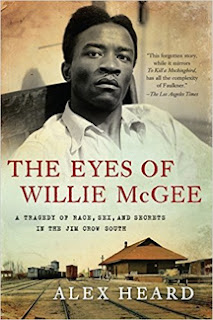
by Alex Heard

http://www.amazon.com/Eyes-Willie-McGee-Tragedy-Secrets/dp/0061284165/ref=nosim/?tag=chickenajourn-20

In this gripping saga of race and retribution, Alex Heard (editorial director of Outside magazine) tells a moving and unforgettable story of the deep South that says as much about Mississippi today as it does about the mysteries of the past. In doing so, he evokes the bitter conflicts between black and white, north and south in America


Reading a Poem by Rudolph Lewis at Winter Solstice


Defying Raging Night

Darkness stretches out in this new moon forest
like highway pitch. Still I hear mockingbird.
I’ve walked worn wooded paths through tangling
bushes on such nights, hurried home on snaking dirt
roads, in ancient cypress swamps, overarching
oaks hiding the twinkling stars in a purple sky.
When I was a boy insect sounds did not break

my faith. I’ve walked too red hills of Bukavu
and knelt by the glassy waters of Lake Kivu,
spoke with the god of rivers, crying
out ties as solemn as oaths on holy books.
At the Grand Marché, I saw a man his torso
on a board roll himself along with padded hands.
On the plains of Goma where I once relieved

myself, where later men, women and children
sought refuge from tribal rage and bloodlust
seeking machetes, I was Kongo. A survivor
of that nightmare passage with strange tongues,
the spirit-killing crammed sadness of iron chains.
I’ve known the blackness of life yet I’m still
fool enough to sound out a Mockingbird spring.

  http://www.amazon.com/Mockingbirds-at-Jerusalem-Poetic-Memoir/dp/087831041X/ref=nosim/?tag=chickenajourn-20


Reading a Poem by Rudolph Lewis at Winter Solstice

Good readings are sometimes governed by iconoclasm, the smashing of established gestures of decoding.  A reader just walks out of the prison built by guardians of culture; she or he discards mindcuffs and explores; he or she discovers the wilderness is more intellectual than the glacial chambers in palaces of wisdom, the prisons of correctness.  Despite probable errors of misreading, the reader’s sense of being independent is rewarding.

When I first read the typescript of Rudolph Lewis’s Mockingbirds at Jerusalem, I felt that I was discovering traces of unbridled creativity.  The most important features of his craft and craftsmanship were derived from paying more attention to life rhythms than to treatises on prosody and monographs on how to write a poem.  The bane of much contemporary poetry is disingenuous professionalism. What does it profit a poet to achieve technical brilliance without fire?  Lewis has mastered fire and artistry.

After reading the published version of Mockingbirds at Jerusalem (Pikesville, MD: Black Academy Press, 2014), I have rediscovered “Defying Raging Night,” one of several touchstones in the book.  Lewis has the discipline needed to write such fresh, engaging villanelles as “The Thrill Is Gone: A Blues Villanelle” and “Get Up Dead Man: Blues Villanelle #2.”  I am attracted more, however, his playing a riff on the formality of the villanelle by invoking the blues in “Defying Raging Night.”  The poem is a defiant tribute to Dylan Thomas’s masterpiece “Do Not Go Gentle Into That Good Night,” a tribute that confirms the rightness of Thomas’s general imperatives to resist the inevitable by displacing them with specific, burning recognitions from African American blues ethos.  Thomas inspires. Lewis empowers.  Lewis demonstrates that fixed poetic structures can be unfixed to one’s advantage.

Lewis’s achievement in this poem depends on cultural literacy, a reader’s ability to grasp allusions: “in ancient cypress swamps” ---James Weldon Johnson; “ringing insect sounds affirmed” ---Richard Wright; “I’ve known black wonders”---Langston Hughes. Place names evoke knowledge of African geography and scenes of ethnic language creation as well as genocide—Bukavu, Lake Kivu, Goma, Grand Marché, and Kongo. A genuine reading of “Defying Raging Night” absorbs a reader, uniting her or him with the lyric persona as a Middle Passage survivor who can know “black wonder soothing enough to/write letters in hope of a Mockingbird spring.” 

The poems in Mockingbirds at Jerusalem are aesthetic tools for building something positive and as yet unknown during winter in America.  Read.  Use the tools Rudolph Lewis has given us to increase our collective ability to resist ignorant armies that clash in raging night.  Read. Build critical independence.

Jerry W. Ward, Jr.                           December 21, 2014


Saturday, May 7, 2016

Book Reviews

Language of the Blues May 2016


The Language of the Blues: From Alcorub to Zuzu 2006
by Debra Devi


The Language of the Blues is a must-have for fans of blues, jazz, rock and slang. in it, author. rock musician and Huffington Post blogger Debra Devi explores over 150 terms like buffet flat, killing floor, and mojo with fresh insights from her in-depth interviews with blues legends like Hubert Sumlin, Robert Jr. Lockwood, Henry Gray, Bob Margolin, Robben Ford, Jimmie Vaughan and more. "As a musician myself, not a scholar," Devi explains, "I thought I could best make a contribution by talking directly to blues artists about what the words in blues songs mean to them."

The result is a lively read Blues Revue deems "an essential purchase for scholars and fans."  New York Times columnist Shelton Ivany adds, "If you have any questions about songs, lyrics, musicians or events, chances are you will find your answers in this unparalleled publication."

The Language of the Blues opens with a remarkable foreword by Dr. John, who helped Devi uncover the illegal gambling origins of terms like "gig" and "axe."  This new edition includes over 30 stunning photos of legendary blues artists (17 in color).


*   *   *   *


Citizen: An American Lyric
by Claudia Rankine 


Claudia Rankine's bold new book recounts mounting racial aggressions in ongoing encounters in twenty-first-century daily life and in the media. Some of these encounters are slights, seeming slips of the tongue, and some are intentional offensives in the classroom, at the supermarket, at home, on the tennis court with Serena Williams and the soccer field with Zinedine Zidane, online, on TV-everywhere, all the time. The accumulative stresses come to bear on a person's ability to speak, perform, and stay alive. Our addressability is tied to the state of our belonging, Rankine argues, as are our assumptions and expectations of citizenship. In essay, image, and poetry, Citizen is a powerful testament to the individual and collective effects of racism in our contemporary, often named "post-race" society


*   *  *  *  *  *
But a Storm is Blowing From Paradise
By Lillian-Yvonne Bertram 


But a Storm is Blowing From Paradise emerges at a time when science is discovering more and more about the mystical particles that make up our universe and our bodies. From tidal forces and prairie burns to ruminations on racial identity while standing at the foot of Mount Rushmore, these poems chart a travelogue through mental and physical landscapes and suggest that place, time, love, and bodies are all shifts in the “undulate cosmos.” Straddling the lyrical and experimental, these poems conjure and connect the cosmological, the carnal, and the personal in a country—and a universe—that is gobbling itself into oblivion. But a Storm is Blowing From Paradise is in love with the universe of language—its forms, its sounds, and even its static.